
B2B Enquiry Desk Automotive Restraint Components

Library

Working documents, not articles.

Five short resources that end in something you can act on. Read them on the page — nothing here needs downloading, and nothing here is gated.

Items
Two guides and three working sheets
Format
Read on page, no download
Purpose
Preparation before a vendor enquiry
§ 01 Library

Five things worth working through before you write

These are working documents rather than articles. Each one is short, each one ends in something you can act on, and together they cover the preparation that makes a vendor enquiry answerable on first reading. Nothing here needs to be downloaded — read it on the page and work from it.

Res. 01
A person in a dark suit seated in a car, drawing the seatbelt across to fasten it before setting off.
Preparation before contactIllustrative
Resource 01 — Checklist

Wholesale enquiry checklist

The complete list of what a commercial enquiry should contain, in the order it is most useful to supply. Work down it once and the enquiry is written.

  • Vehicle or application named in plain words.
  • Seating position stated explicitly.
  • Whole restraint, assembly or single component identified.
  • Photographs: in place, removed, mounting point, marking.
  • Any reference already present on the item, recorded exactly.
  • Quantity with units and a per-vehicle breakdown.
  • Destination city and country.
  • Whether the requirement repeats, and how often.
  • Any date the requirement is tied to.
  • Contact details you monitor, with a stated preference.
Takeaway An enquiry that answers all ten points can usually be responded to on its substance immediately, without a round of clarifying questions.
Res. 02
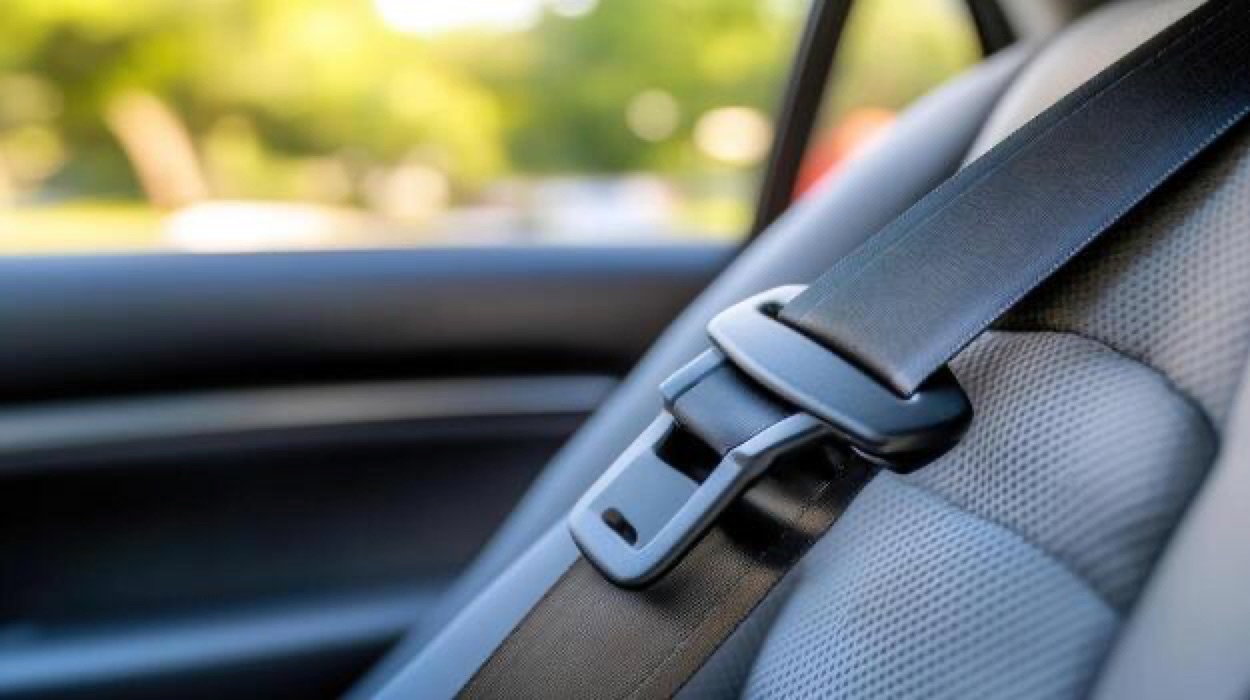
Close daylight view of a black seatbelt latch plate and webbing beside a vehicle door pillar, with greenery visible through the window.
Hardware detail, well litIllustrative
Resource 02 — Guide

Product identification guide

How to work out what you are actually holding, and how to record it so that someone else can recognise it too. The method is ordinary; the discipline is what makes it work.

  • Search every face of the part for moulded, stamped or printed characters.
  • Check the webbing itself — labels are often woven or stitched near an end.
  • Transcribe markings exactly, including characters that look meaningless.
  • Photograph the marking close up, in daylight, with the camera steady.
  • Note what the part connects to at each end before removing it.
  • Record the vehicle and the seating position alongside the part details.
Takeaway A marking photographed clearly outranks any written description. If you find one, it becomes the centre of the enquiry.
§ 02 Working sheets

Three sheets to work through on screen

Shorter than the two guides above and meant to be used in the moment — while the vehicle is in front of you, or while the order is being decided.

Sheet 03 Context

Application information checklist

What to record about the setting the part lives in. This is the half of the enquiry buyers most often leave implicit, and the half that decides whether an answer is relevant.

  • Vehicle type and body configuration, described as fully as you can.
  • Seating layout, and which positions the requirement covers.
  • How the existing item mounts, photographed rather than described.
  • How the belt routes through the cabin from anchor to buckle.
  • Whether the vehicle is in service, off the road, or being built.
  • Whether an exact match to the existing arrangement is required.
Takeaway Context is the frame that makes a part description mean something specific rather than something general.
Application matrix
Sheet 04 Preparation

Buyer preparation guide

Ten minutes of preparation before the first message routinely saves several days of correspondence. Here is where that ten minutes is best spent.

  • Decide what you actually need before describing what you have.
  • Settle whether an exact match or a functional equivalent is acceptable.
  • Agree the quantity internally so it does not change mid-conversation.
  • Confirm the destination and who will receive the goods.
  • Establish any real date constraint, and say so if there isn't one.
  • Collect the photographs before writing, not after being asked.
  • Nominate one person to hold the conversation from your side.
Takeaway The commonest cause of a slow enquiry is a requirement that was still being decided while it was being sent.
The six-stage process
Sheet 05 Answers

Frequently requested information

The details most often asked for in a second message. Supplying them in the first one removes an entire round trip.

  • Which seating position — stated, not implied by context.
  • Whether the enquiry covers the whole restraint or one part of it.
  • The colour of the webbing and of the visible hardware.
  • What the part attaches to at each end.
  • Quantity broken down per item and per vehicle.
  • Destination city and country.
  • Whether this is a one-off need or a repeating one.
  • Whether you are comparing options or ready to proceed.
Takeaway These eight points are what a clarifying reply almost always asks for. Answering them unprompted is the easiest way to speed things up.
Read the FAQ

Worked through them? Send the enquiry.

The contact form asks for the same information in the same order, so the work you have just done transfers straight across.